
Photo Taken by me of General Kang Kamchan at Nakseongdae, Seoul, South Korea.
Hello.
Today I wanted to talk about one of my favourite historical figures – the great military commander 강감찬 (Kang Kamchan, as I will refer to him for ease of reading). Why is he one of my favourites? Well I hope to answer that in this blog.
Kang Kamchan (948-1031) was a Korean military commander during the Goreyo (고려) period. Goreyo was the unified Korean state which existed from 918-1392. In addition to being a military leader, Kang Kamchan was a scholar and government official. He played a crucial role defending Korea in the Third Goryeo-Khitan war (1018-1019) which was part of the larger Goryeo-Khitan conflict (993-1019).
I should probably set the stage here. The old Korean kingdom known as Silla (신라, 57 BCE-935 CE) experienced a significant decline until it was ultimately replaced by the unified state of Goreyo. This followed a period known as the Later Three Kingdoms in which the three ruling states (Goguryeo, Baekje, and the ruling Silla) were engaged in constant conflict.
To the north, the Liao dynasty, which was a Khitan led dynasty of China and an empire which existed from 916 to 1125, conquered Balhae (渤海) in 926. Balhae was a significant kingdom situated north of Korea in modern day North East China. The last crown prince of Balhae and his loyal survivors, fled south, to Goreyo (Korea).
In 993, the Liao dynasty invaded the northern borders of Goreyo with a force that was alleged at the time to be over 800,000 strong. After a period of two months, a stalemate was declared, however Goreyo made significant compromises to end the conflict, such as ending their relationship with the friendly Song dynasty to the west and a requirement to pay tribute to the Liao dynasty. Despite this, Goreyo strengthened their defenses in the meantime and continued to work with the Song dynasty in secret.
In 1009, the King of Goreyo, Mokjong was killed in a coup and a military rule was established. The Liao dynasty saw this as an opportunity (in my opinion) and attacked with 400,000 troops in 1010. They claimed to want to avenge the death of the King (how convenient). The ultimate invasion saw the death of the de facto military commander of Goreyo, but Liao was unable to establish complete victory. They attacked again in 1015, 1016, and 1017 with indecisive results.
Which brings us to the hero of today’s blog. In 1018, the Liao dynasty launched a significant campaign against Goreyo, marking the Third Goryeo–Khitan War. The army crossed the border of the Yalu river in late 1018. Kang Kamchan ordered a river to the east to be dammed. When the invading Liao crossed the Yalu river, Kang Kamchan opened the dam and attacked the enemy with 12,000 mounted warriors. They inflicted severe losses on the Liao armies and cut of their retreat. During this initial retreat, over 10,000 Liao were destroyed. With the line of retreat cut off, the Liao marched south to the capital. General Kang Kamchan relentlessly harassed the Liao army during their campaign south and cut off their supplies. On March 10, 1019, Kang Kamchan, having predicted the Liao would discontinue their campaign and attempt another retreat, encircled the Liao at Kuju (present day Kusong, North Korea) while the Liao were attempting a full retreat and annihilated over 90,000 of their soldiers. Only a few Liao soldiers survived and were able to cross the border in the north. To this day, the victory and strategic decisions made during the war are known as some of the greatest in Korean history.
Following this, Liao ceded territory in the north to Goreyo and the kingdoms would establish relative peace which would last until the end of the Liao dynasty.
It was said that when Kang Kamchan was born, a meteor fell toward his house, and when an advisor to the king visited, they found a baby was born there. His birthplace is called Nakseongdae (낙성대 – literally “site where a star fell”) and it is located in modern day Seoul. It is where I took the above photo. And also this pretty picture:
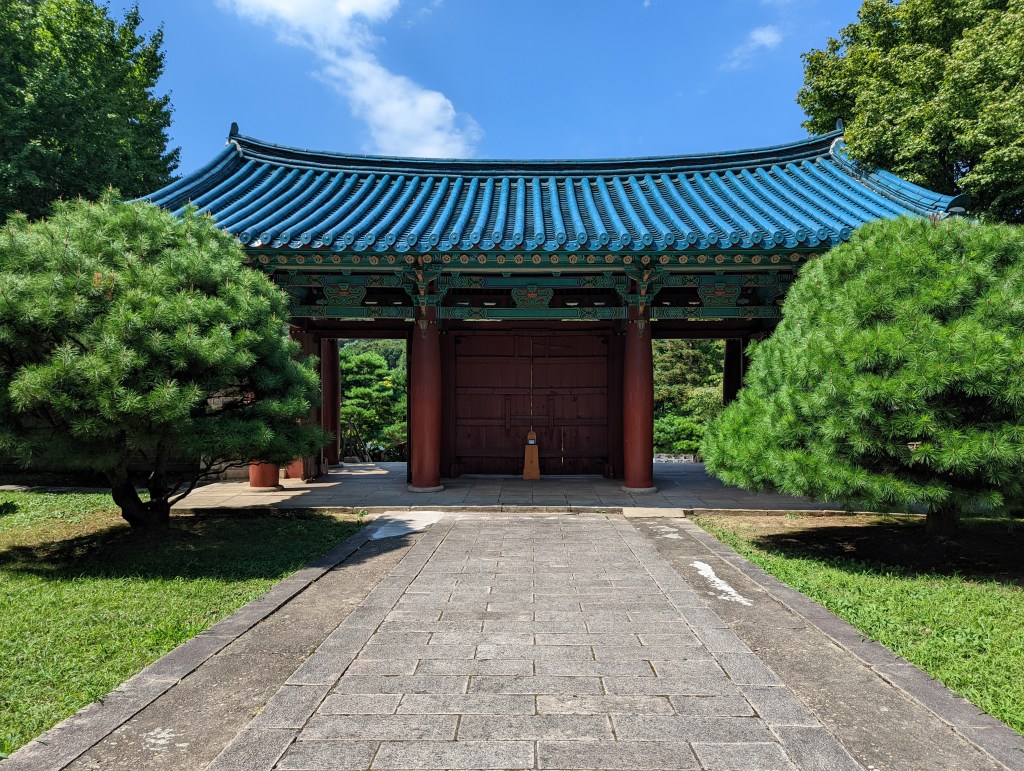
Kang Kamchan was known as a hero after this conflict and retired. To this day he is celebrated as a national hero of Korea and a genius military tactician. At his birthplace, Nakseongdae, a memorial ceremony is held at the shrine (called Anguksa – 안국사) every October to commemorate the general.
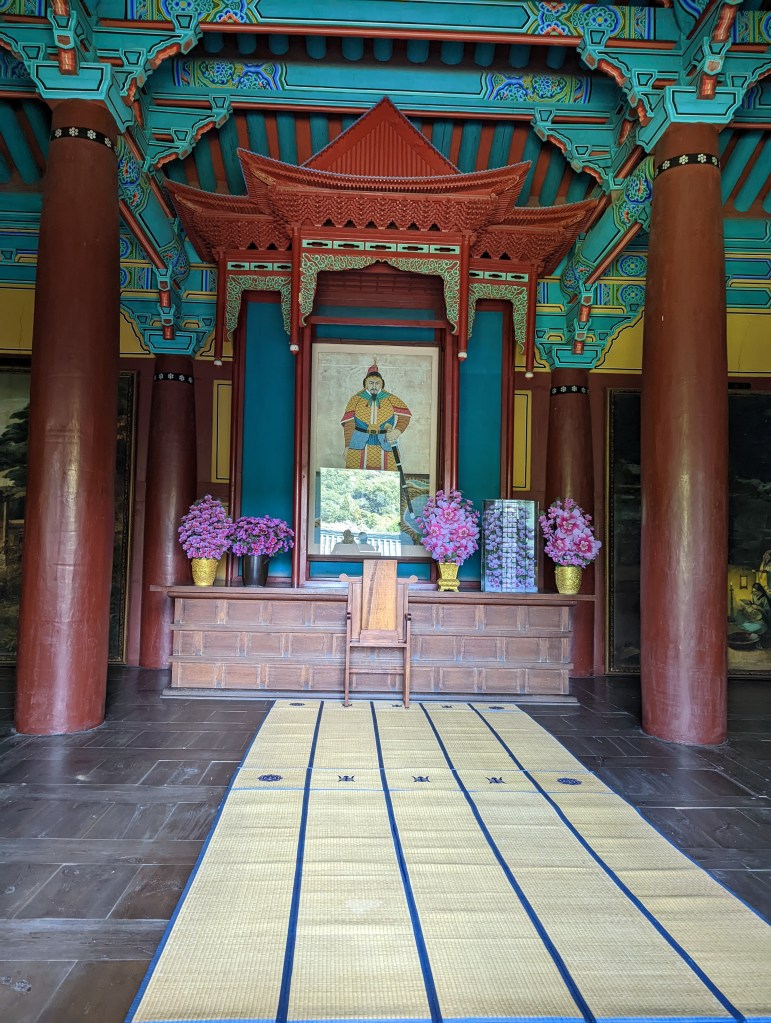
Shrine of Kang Kamchan – taken by me in Nakseongdae.
That’s all for today. I hope you enjoyed and I hope you learned something.
– Pybba
 Pybba Speaks
Leave a comment